Seven Pop-Up Ideas We Pitched That Nobody Bought (And Why We'd Still Defend Six of Them)
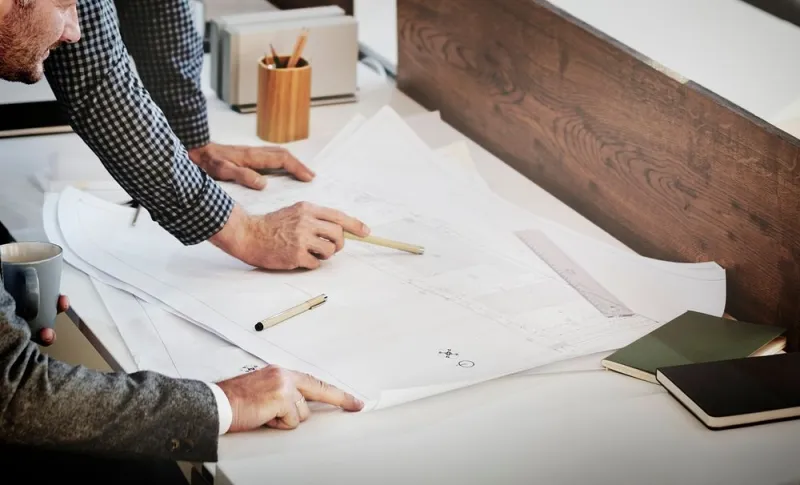
Photo: architects studio rejected design sketches pitching meeting, via images.rawpixel.com
Design studios love showing off the work that shipped. Glossy photos, happy clients, job done. But behind every polished case study sits a graveyard of pitches that never made it — and honestly, that graveyard is where we've learned most of what we know.
So here it is: seven ideas we pitched that nobody bought. We'd still defend six of them. The seventh was genuinely terrible and we're lucky a client didn't call our bluff.
1. The Multi-Storey Marble Run (Birmingham)
The pitch: a giant transparent marble run spiralling down the outside of a city-centre multi-storey car park, with interactive gates families could control from the ground. Kids loved the mock-up. The client loved the mock-up. Then someone asked who owned the car park, who owned the external walls, who insured a marble at height, and what happened in a Brummie gale.
What killed it: logistics, not imagination. What we'd change: we've since built versions of the same idea at ground level. The joy survived the descent.
2. The Inflatable Seaside (Leicester)
An entire beach — inflatables, deckchairs, a paddling zone — inside a shopping centre, forty miles from the nearest coast. The client's marketing team adored it. Their finance team asked what the cleaning bill was for four tons of imported sand.
What killed it: sand. Just sand. The lesson: sometimes the obstacle isn't the idea, it's the hoovering.
3. The Reverse Escape Room
Instead of getting out, families had to get in — a series of puzzles guarding a big, silly prize. Everyone nodded politely. Nobody signed. Escape rooms were, we were told, 'a bit 2019'.
What killed it: trends. The lesson: a good mechanic doesn't expire, but its reputation might. Timing matters as much as thinking.
4. The Toddler Traffic Jam
A ride-on course through a 'town' built from foam, complete with roundabouts, a level crossing and a drive-through 'chippy'. We thought it was charming. The client heard 'hard surfaces, collision risk, thirty toddlers' and heard nothing else.
What killed it: a risk assessment that read like a horror novel. The lesson: if you can't tell the safety story in one page, the idea isn't ready.
5. The Sensory Quiet Hour Pavilion
A calm, low-stimulus play space designed with occupational therapists, for families whose children find ordinary activations overwhelming. This is the one we'd defend to the death — and the one that got rejected most politely.
What killed it: footfall projections. The lesson, and it stings: the most valuable ideas aren't always the loudest ones. We've since folded quiet sessions into every project we build. The client who turned it down was, in fairness, the reason we started.
6. The Giant Ball Pit of Local History
A ball pit where every ball colour corresponded to a decade of the town's history, with a trail for families to 'collect' eras. We remain convinced this would have been wonderful and mildly educational. The council, reviewing three pitches in one afternoon, disagreed.
What killed it: decision fatigue. The lesson: sometimes you lose a pitch because someone else's slide deck was shorter.
7. The One We Got Wrong
A 'mud kitchen but professional' — an outdoor cooking-play hybrid with running water, real utensils and a live demo element. It sounded great in the studio. It would have been a swamp by day two, a health-and-safety inquiry by day four. Some ideas deserve to die. This was one.
So What Do Clients Actually Buy?
After years of this, the pattern is clear. Clients buy ideas that are easy to explain in one sentence, cheap to insure, and photogenic from above. Designers fall in love with mechanics, narratives and cleverness. Buyers fall in love with feasibility.
The trick isn't to stop pitching the marble runs. It's to pitch the marble run and the version of it you can actually build — then let the client pick which dream they're buying. Half the time, they'll surprise you.