Nobody Puts the Grown-Ups in the Ball Pit: Designing Play That Refuses to Segregate by Age
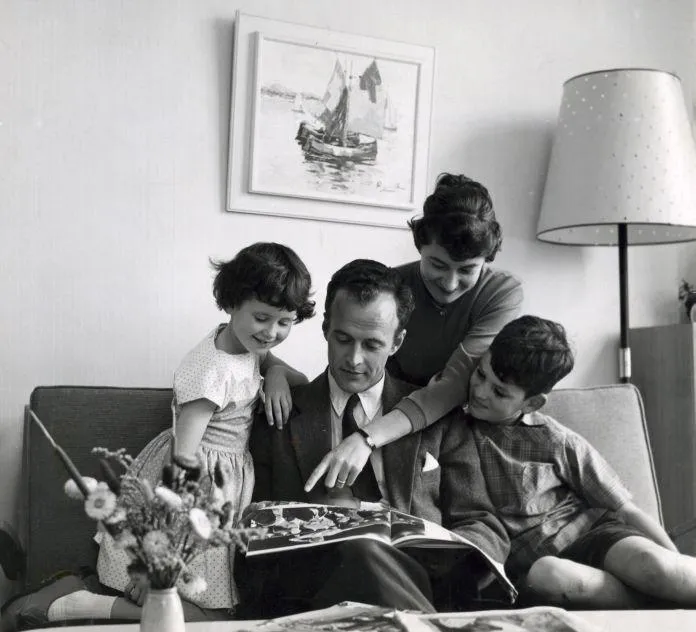
Photo: Nationaal Archief, No restrictions, via Wikimedia Commons
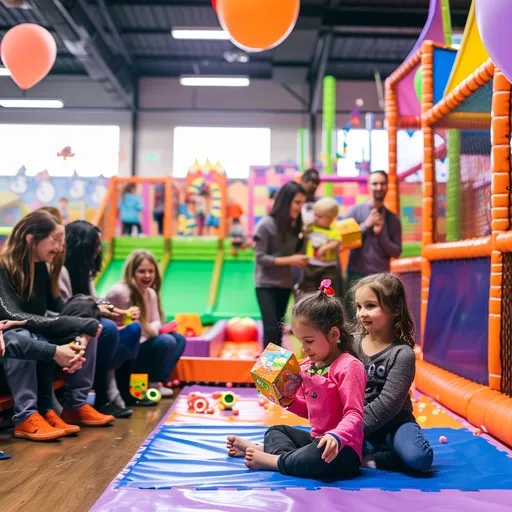
Walk into most soft play centres in Britain and you'll spot the same architectural confession: a café, positioned as far from the play equipment as physically possible, behind a rope, with a view of the chaos and no part in it. Adults are spectators. Children are participants. Never the twain shall meet.
We think this is a design failure, and we'd like to make the case for the alternative.
The Great Age Segregation Problem
Modern British childhood is remarkably age-sorted. Nursery, then school, then age-banded clubs and parties — children spend most of their play lives with people born within twelve months of themselves. Meanwhile, adults have their own entirely separate leisure economy, and the two barely overlap except in stilted formats: the birthday party where parents hover by the squash, the park bench scroll.
But watch what actually happens when you don't separate people. Grandparents become unexpectedly competitive at giant Connect Four. Dads who 'don't do dancing' find themselves leading a conga line. Teenagers, supposedly allergic to everything, get absorbed in a building challenge alongside a six-year-old who is genuinely better at it than they are.
Play is one of the very few activities that flattens age. Good design should lean into that, not fight it.
The Café-Adjacent Play Area: Britain's Last Mixing Ground
There's something quietly radical about the café with a play corner. It's not a dedicated play centre — nobody's paying entry, nobody's dressed for it. It's just a room where a parent can have a flat white while their toddler posts wooden vegetables into a felt till three feet away. And crucially, the adult is in the room. Not at the edge of it. In it.
We'd argue this unglamorous arrangement is one of the last genuine mixing grounds on the high street. It costs nothing to enter. It doesn't require booking or membership. It welcomes the pram, the grandparent, the bloke in hi-vis on his break. That accessibility is worth protecting in how we design these spaces.
Sightlines: The Single Most Important Decision
If you take one thing from this piece, take this: the parent's chair is not an afterthought — it's part of the play equipment.
Seating should face the play, not a wall. Adults should be close enough to be pulled into a game, near enough to comfort a wobbly moment without a cross-country hike. The best café play corners we've built put seating within arm's reach of the play structure's edge, angled inwards, at a height where an adult can make eye contact with a seated child. That last one matters more than any colour palette: eye contact is how toddlers invite you in.
Shared Equipment Beats Age-Banded Zones
The instinct is always to split: soft area for under-fives, climbing frame for bigger kids, seating for adults. Three zones, three audiences, nobody talking to each other.
Instead, we design for overlap. A giant sand table works for a two-year-old and a fifty-two-year-old at the same time — they're just building different things. A tower-building station with pieces at multiple heights lets a parent kneel at the bottom while a child stacks at the top. Games with cooperative rather than competitive rules mean an adult and child are on the same team by default.
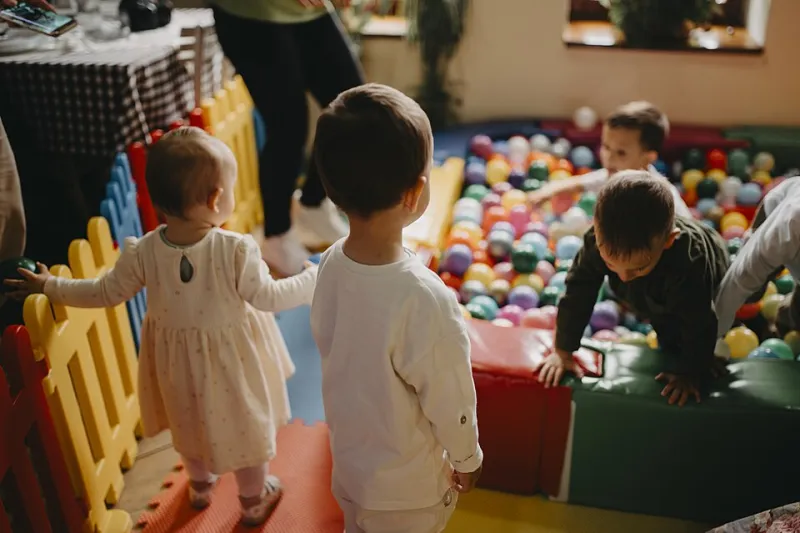
Even the humble ball pit can be rescued from segregation — make it shallow, make it visible, make it big enough for a grown-up to sit in it without dignity loss. Nobody puts the grown-ups in the ball pit because nobody designed the ball pit for grown-ups. That's fixable.
Design for the Interruption
Here's the paradox of mixed-age play: adults don't want to commit to it, but they'll happily be swept into it. So design for the interruption, not the invitation. A game that can absorb a passer-by in ten seconds. Equipment that works whether one person or six are using it. Play that rewards the parent who crouches down for a moment with something genuinely enjoyable — not a duty, an actual small pleasure.
Because the endgame isn't really about play at all. It's about the fact that the high street is losing the places where generations encounter each other casually, without agenda, without entry fees. If a well-designed play corner in a café keeps a grandparent and a grandchild in the same conversation for twenty minutes on a wet Tuesday, that's not soft play.
That's social infrastructure. With better cushions.