The Grown-Ups Are Watching: Why Play Design Should Work on Parents Too
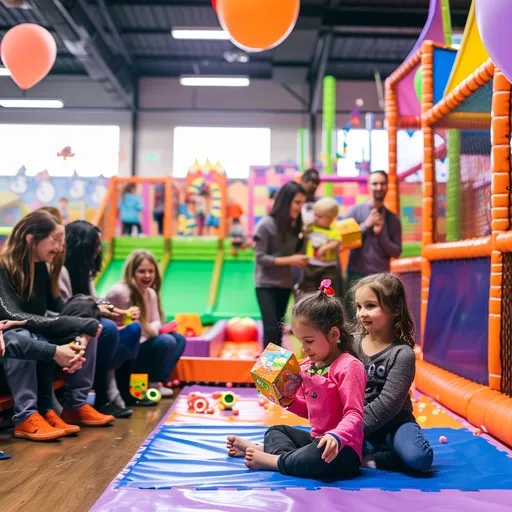
Photo: parents sitting relaxed watching children at indoor play cafe, via images.stockcake.com
Stand at the edge of any soft play centre on a wet Saturday and watch the parents. Not the children — the parents. You'll see the same thing every time: a phone produced within ninety seconds, eyes glazing, a body that has quietly left the building even though it's still physically present.
We've started calling it the 90-second rule, and we treat it as a benchmark. If the accompanying adults in a play space have mentally checked out within a minute and a half, the design has failed. Not the parents. The design.
Play Spaces Are Built for One Audience
It's not hard to see how we got here. Soft play in the UK grew out of a simple commercial logic: contain the children, charge per head, maximise capacity. Adults are infrastructure — a safety requirement, a wallet, a taxi service. The seating reflects it: hard benches with a view of a ball pit and a coffee that tastes of the machine it came from.
But think about who's actually buying the ticket. A four-year-old doesn't have a bank card. Parents choose, parents drive, parents book again — or don't. Designing them out of the experience is commercially daft as well as a bit bleak.
Sightlines Change Everything
The single biggest factor in whether a parent relaxes or hovers is whether they can see their child clearly from a comfortable seat. Not craning past a netted column. Not sprinting to a fire exit slide every 40 seconds because the sightline broke.
When we design pop-ups, we map sightlines before we map equipment. Where does a parent naturally sit? What can they see from there? Can they watch their child navigate a challenge without moving? A parent who can see everything settles within minutes. A parent who can't will stand, pace, hover — and resent the hour.
Seating That Is Part of the Game
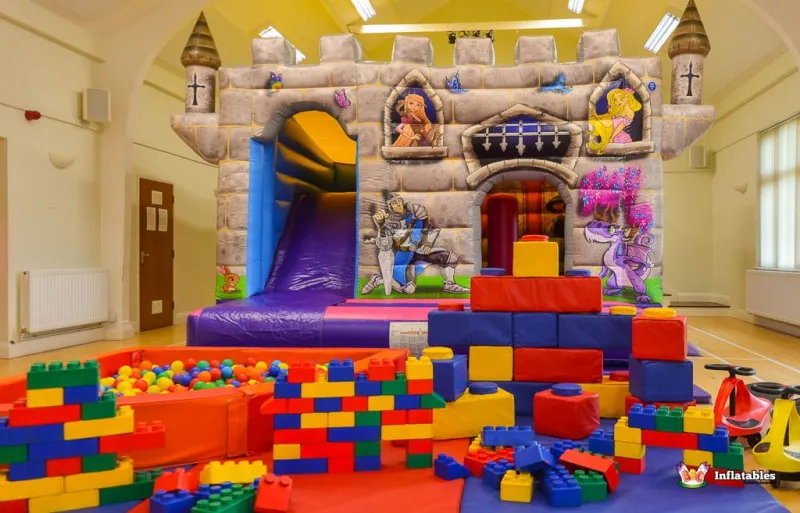
The best fix we've found is blurring the line between seating and play. Stepped timber terraces that double as climbing tiers. Big cushioned blocks arranged around a central zone that kids treat as obstacles and grown-ups treat as sofas. Balance beams at bench height.
At a market-town pop-up last autumn, we watched a dad spend twenty minutes sitting on a stepped play block while his daughter ran a 'shop' at his feet — he was the customer, she was the shopkeeper. He never looked at his phone once. That's not an accident of layout; it's the layout doing its job.
Coffee-Adjacent Play Zones
We're not pretending a flat white fixes everything, but the geography of the coffee matters. In most soft play, the café is a separate room, a destination you leave the play floor to reach — which means parents are constantly choosing between caffeine and supervision.
Our rule of thumb: good coffee within ten metres of the play zone, with seating angled towards the action. The café becomes part of the experience rather than a retreat from it. Parents linger, chat, order a second round. Children get longer, calmer sessions because nobody is clock-watching by the door.
Why This Sells Tickets
Here's the commercial argument, because we know venue owners will ask. Across our events, sessions designed around the whole family consistently run longer and rebook at a higher rate. Parents who enjoyed the hour talk about it in the playground, on the school run, in the group chat. Parents who spent the hour staring at a wall talk about the coffee being £3.80.
Word of mouth from adults is the cheapest marketing a play event will ever get. And it only happens if the adults had a decent time.
A Simple Test for Any Play Space
If you run a play venue — permanent or pop-up — try this. Walk in as a parent, order a drink, sit down, and start a timer. Ninety seconds. At the buzzer, ask: am I comfortable? Can I see my child? Is there anything here for me to enjoy?
Three yeses and you've built something special. Anything less, and you've built childcare with a till. The families will come either way — but only one of those designs gets them back.