Where Our Ball Pool Goes at 6pm (and Why It Always Comes Back)
There is a point in the day, usually around six, when the last child is dragged out by a parent and the photographs are over. What's left is a muddle of mats, a deflating slide, a few hundred plastic balls in a corner, and a two-person crew with a clipboard.
People assume the interesting part of the day is over. It isn't. It's just moved somewhere with better lighting and less screaming.
The Van Unpacks Before It Parks
We don't drive home and deal with it in the morning. Kit that gets stacked wet, tired and unsorted overnight becomes kit that gets thrown out, and we are too stubborn for that.
The rule is simple: every item is inspected, wiped, sorted and logged before it goes on the rack. Not thoroughly — that happens later — but enough to catch anything catastrophic. A split seam gets tagged. A ball with a film of something unidentifiable gets pulled. A mat that smells of Friday night goes into the van's back row.
That first twenty-minute pass is why our repair rate is what it is. Damage caught at six on a Saturday is a five-minute job. Damage caught three weeks later, in a stacked corner, is a replacement.
The Deep Clean, Which Is Not a Euphemism
Once a fortnight, the whole kit comes out and gets washed properly. Ball pool balls go through a mesh bag and a washing cycle; the structure itself gets hosed, brushed and dried flat in a warm room with a fan pointed at the underside, because trapped moisture is the beginning of the end for anything vinyl.
Soft mats get their covers off, and covers get washed properly rather than wiped. Soft toys get the freezer-and-spot-clean treatment. Blocks get cleaned and, crucially, dried before they go back in the crate — wood that goes away damp comes back out smelling of a swimming pool.
This is unglamorous work. It is also, by a mile, the single biggest reason our kit lasts as long as it does.
The Repair Shelf
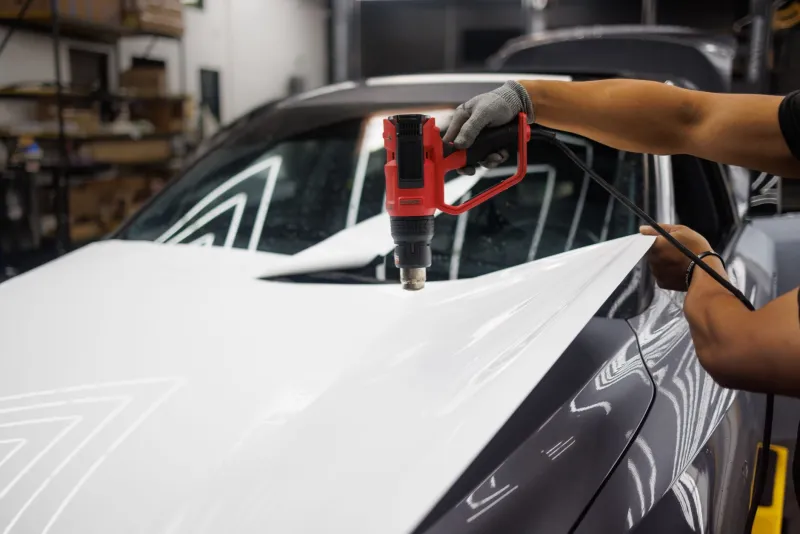
We have a shelf, and on the shelf sit the patients. Vinyl patches, a heat gun, a tin of adhesive, replacement zips, a bag of matching plastic buckles, spare ball pool balls in the exact size and colour we use (worth ordering in bulk — nothing ruins a pool's look faster than a mismatched bag of mystery balls).
Small rips get patched. Seams get re-stitched. Blowers get stripped, their filters blasted, their blades checked. We keep spares of the genuinely boring bits — hose collars, tie-down straps, the little plasticky things whose name nobody knows — because those are what fail first.
What we've learned: if a repair takes longer than the item cost to buy, we don't throw it out immediately. Sometimes it gets demoted instead — the tired mat becomes the door mat, the slightly saggy pool becomes the toddler-reception one where nobody will notice the difference.
The Suppliers Who Keep Us Honest
We buy as much as we can from the small lot. There is an inflatable workshop in the Midlands where the person who answers the phone is also the person who runs the needle, and they will tell you flatly that a seam is not worth saving when it isn't. There's a textile firm in Lancashire we go to for cover fabric. There's a bloke who supplies our fasteners and gently mocks us for the way we organise orders.
That's not romantic, and it isn't a marketing story — it's just what makes the sums work. A repair from a workshop that knows the item costs less than a new item, and the turnaround is measured in days because they aren't routing us through a warehouse in another country.
Our test for a supplier is straightforward: can we talk to a person who has physically handled the goods? If not, we tend not to bother.
So Can an Inflatable Ever Really Be Green?
Let's not pretend. An inflatable is a large object made of plastic, usually PVC, sometimes TPU. It arrives in packaging. It is inflated by a blower that draws electricity. Its end of life is complicated and, in practice, often not what any of us would like.
Anyone telling you their inflatable is fully circular is selling you something. What we can honestly claim is narrower than that:
- We buy less. Fewer, tougher items, chosen for repairability over novelty.
- We repair obsessively, and we have the boring records to prove it.
- We keep spares rather than replacing whole units.
- When something genuinely dies, we strip it for parts before it goes anywhere.
- We try not to buy anything where the blower, the seams and the valves are unserviceable.
And the bit we cannot claim: that this makes the kit carbon-neutral, or recyclable, or beyond criticism. It makes it longer-lived. Those are different words and we'd rather use the right one.
There's also a fair challenge we get asked at events — usually by a thoughtful eight-year-old — about whether the whole thing would be better if we just didn't. Honestly? For a single family picnic, yes, a picnic blanket is better. For a play session with three hundred children in one afternoon, our kit does more per kilogram of plastic than almost any alternative we've costed.
The Drawer of Odd Screws
Every operation acquires one. Ours has cable ties, a magnet, spare fuses, a whistle nobody will claim, and a collection of tokens that have somehow escaped their session.
We keep it because the alternative is buying a whole new one of something for the sake of a two-pound part, and because a drawer of odd screws is a decent symbol of how we'd like to run this business: not especially tidy, but not wasteful either.
What We Still Haven't Solved
The end of life problem. Genuinely. Some items have an obvious route — fabric to textile recycling, wooden blocks to a school, balls to whichever nursery will have them. Inflatables with a failed seam in an awkward place do not have a clean answer, and we suspect that will remain true for a while.
We're working on it. In the meantime, our approach is the unglamorous one: buy well, repair hard, keep records, and don't write a sustainability page that describes a business we haven't become yet.