"Come and Look at This": The Only Metric Worth Framing

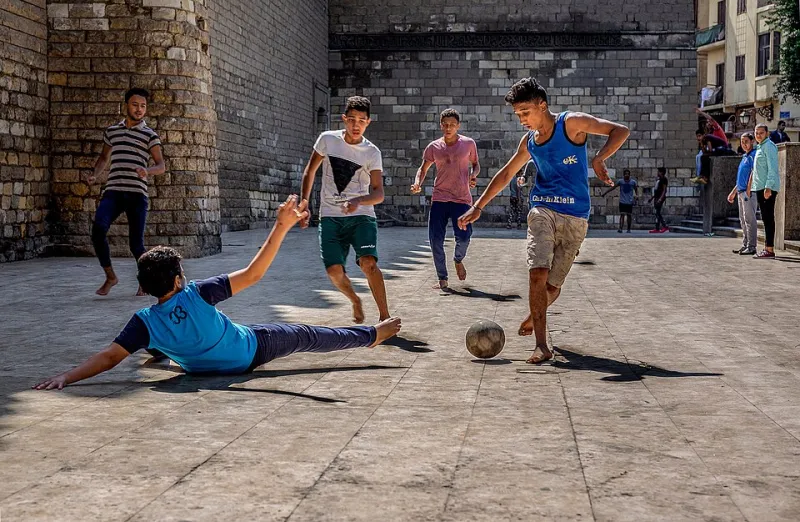
Photo by Photo by Amanda Costelloe on Unsplash on Unsplash
Somewhere in a filing box in our Sheffield workshop, there's a battered notebook labelled Overheard, Vol. 1. It started as a joke. One of our play stewards, waiting out a quiet Tuesday session in a Swindon shopping centre, wrote down a single line a boy of about six had murmured to his sister: "Don't tell anyone but this is better than soft play."
Five years later we're on Volume 4. And we've come to believe those marginal notes tell us more about whether a pop-up works than any evaluation form we've ever been handed.
The Problem With Asking Children Questions
Here's the uncomfortable truth about the standard feedback loop in this industry: the moment you ask a child whether they enjoyed something, you get a performance. They'll say it was "good" or "amazing" or — if you've really messed up — "fine". They know they're being asked. They know a grown-up is writing it down.
Play doesn't work like that. Play is at its most honest when nobody's watching, which is precisely why the most valuable thing a child can say is something they say to someone else, half-absently, while their hands are still busy.
"Come and look at this."
That's it. That's the whole brief. When a child whispers those five words to a friend, a sibling, or — and this is the gold standard — a complete stranger they've never met, they've done something remarkable. They've decided the thing you built is worth interrupting their own fun for. They've appointed themselves an ambassador for your pop-up. No brand activation spend can buy that.
Our Steward Notebook, Annotated
A few entries from the archive, because context matters:
- "It's got a hole in it and that's my favourite bit." — said about a deliberately scruffy den in Wigan. Lesson: polish is not the same as appeal.
- "Shhh, it's sleeping." — a girl, crouched over a soft toy installation in a Cardiff library. Lesson: children will invent narrative if you leave them even a sliver of ambiguity.
- "You have to do it with your eyes shut." — an instruction passed between two boys at a tactile wall in Leeds. Lesson: if your experience survives being done blind, it survives anything.
Notice what's absent from all of these. No mention of branding. No mention of the sponsor's logo on the entrance arch. The children are talking about texture, story, ritual. That's what's actually landing.
Why Brands Should Care
If you're commissioning a pop-up — and we've built them for everyone from regional supermarkets to heritage attractions — your evaluation deck probably contains footfall counts, dwell times, social mentions and a satisfaction score. All fine. All measurable. None of them capture whether the experience mattered to a child.
So here's our proposal, and we mean it half-seriously: build your KPI framework around the whisper.
The Whisper Rate: per hundred children through the door, how many were observed inviting someone else into the experience? Our stewards track it with a simple tally and a bit of discretion. A good session hits somewhere north of one in five. A great one — the kind people ring us about months later — doubles that.
The Stranger Factor: of those whispers, how many were directed at a child the inviter had never met? This is the strongest signal we've found that an experience has genuine social gravity. Children don't recruit strangers to boring things.
The Return Line: the phrases children use when leaving. "Can we come back" is decent. "I'm coming back on Thursday" — spoken as fact, to nobody in particular — is the one that makes our week.
How We Actually Collect It
No clipboards. No surveys. Just stewards trained to hover usefully and listen uselessly. We brief them on one rule: write down what you hear, never what you think it means. Interpretation comes later, with tea, as a team.
The method is unscientific and we'd defend that. The point isn't statistical rigour; it's proximity. You cannot understand a play space from a spreadsheet any more than you can understand a wedding from the guest list.
The Bit Where We Defend Ourselves
Some clients push back. "Children say all sorts of things," they say. "How do you know it's meaningful?" Fair question. Our answer: we don't know in the moment. But patterns emerge. When forty children across four sessions all invent their own rules for the same installation, that's not noise. When the scruffy den outperforms the expensive interactive wall three towns running, that's not noise either. That's a design brief for next time, written by the harshest and most reliable critics in Britain: children who owe you nothing.