Sixteen, Confident and Holding the Token Roll: How Local Teens Became Our Best Design Decision
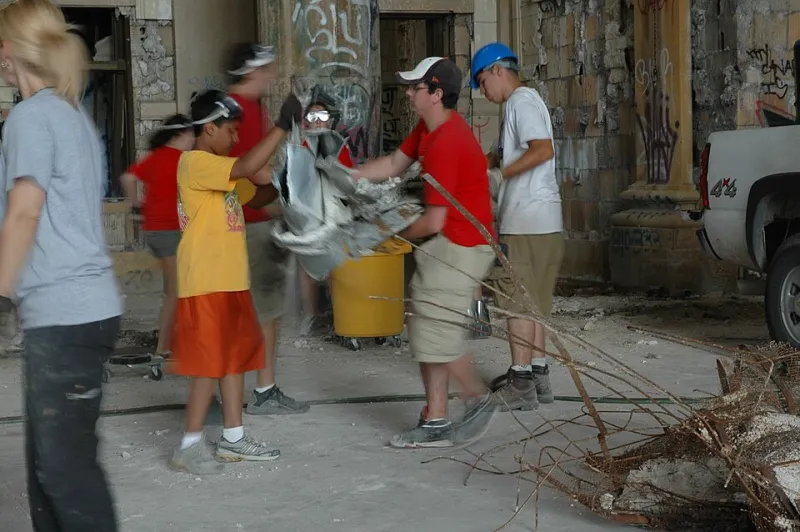
Photo: Friend_in_Detroit, CC BY-SA 2.0, via Wikimedia Commons
It started, as most of our better ideas do, with a problem we'd been ignoring. Our summer season in the West Midlands was booked solid — three towns, twelve weeks, one very tired core team. We needed extra hands on the ground, and the obvious route (hiring more experienced session leaders) was neither affordable nor fast.
So we tried something else. We put a call into the local youth club in one of the towns, asked for a couple of confident fifteen-to-eighteens who fancied paid work over the holidays, and called the role 'play ranger'. Roll of tokens, lanyard, hi-vis, a two-page briefing sheet. That was the whole kit.
Twelve weeks later, we'd changed our minds about a lot of things.
The Token Roll Was the Job Description
The tokens themselves were almost accidental. We use them as an internal currency at bigger sessions — collect one at each zone, swap five for a sticker or a turn on the big slide. Somebody has to hand them out, keep the roll moving, and gently explain to a four-year-old why they can't have the entire roll.
We assumed that was a dull job for the newest person on site. Wrong. It turned out the token station was the single busiest social hub of the whole pop-up. And a sixteen-year-old with a roll of tokens and zero self-consciousness turned it into the warmest welcome on the site.
Our ranger Jodie (17, from Dudley) had a way of crouching down to toddler height, holding out a token like it was a golden ticket, that no amount of staff training ever replicated. Parents queued at her station just to chat. Kids came back to show her their sticker. She wasn't running an activity — she was running the atmosphere.
What the Teens Changed Without Being Asked
We briefed them on the layout, the safety rules, the session rhythm. We did not brief them on any of the following, all of which happened:
- They lowered the barrier to entry. Teenagers have an instinctive radar for anyone hovering at the edge of a space, unsure whether it's for them. Our rangers would spot a shy seven-year-old within thirty seconds and just... start playing nearby. No invitation, no pressure. It's a technique youth workers know well and we'd never formalised.
- They played harder than we did. Our own team, through no fault of their own, pace themselves across a six-hour day. Eighteen-year-olds on a summer holiday do not. Sessions with rangers on the roster measurably had more noise, more running, more adults dragged into games.
- They talked to the older kids. The eight-to-elevens — the group our pop-ups historically served least well — attached themselves to the rangers like magnet filings. Suddenly that age group had a reason to be there.
The Parents Noticed Before We Did
About six weeks in, we started hearing it in feedback: "the young lad was brilliant with him", "she made my daughter's whole week". One mum told us her son, who usually hangs back at soft play, had spent forty minutes on the obstacle course because a ranger "raced him every single time and let him win exactly the right amount".
That last phrase stuck with us. Let him win exactly the right amount. You cannot write that into a training manual. You can hire people who do it naturally.
There was a practical benefit too. In towns where we were strangers, a local teenager in a branded vest was a walking trust signal. Parents recognised them — a neighbour's kid, someone from the school run. In an era when families are rightly cautious about who's running the bouncy castle, that recognition did more for footfall than any leaflet drop we've done.
Why We Now Call It a Design Decision
Here's the shift in our thinking. We used to treat staffing as logistics: bodies per square metre, ratio checklists, who covers lunch. All still important. But what the summer taught us is that who stands in your play space shapes how the space behaves, as much as anything we build out of timber and foam.
A pop-up staffed entirely by thirtysomethings with clipboards plays differently to one with a couple of local teens at the gate. Not better or worse — differently. The energy is different, the welcome is different, the bits of the design that get used are different. When Jodie started leading impromptu games in the corner of the site we'd always struggled to activate, that wasn't a staffing outcome. That was the design working differently because the people in it were different.
So now, when we plan a season, youth recruitment sits in the design meeting, not just the rota. We ask: which local organisations already work with young people here? What's the pay and the safeguarding picture? What's the briefing that gives them confidence without flattening their instincts?
The Honest Caveats
We'd be overselling it if we didn't mention the friction. Teenagers need proper pay, proper breaks and proper supervision — a responsible adult on site at all times, clear safeguarding lines, and a manager who actually shows up when they say they will. Reliability wobbles around exam results week. One of our three rangers lasted a fortnight before deciding retail was more her speed, and that's fine; not every experiment sticks.
But two of the three came back for the October half-term. One is now designing her own mini-zone for next spring, which is a sentence we did not expect to write this time last year.
The roll of tokens, it turns out, was never the point. The point was that play spaces belong to the people who use them — and the people who use them most enthusiastically are usually the ones we'd forgotten to hire.