The Sock by the Slide: Reading the Wreckage After a Play Session Ends
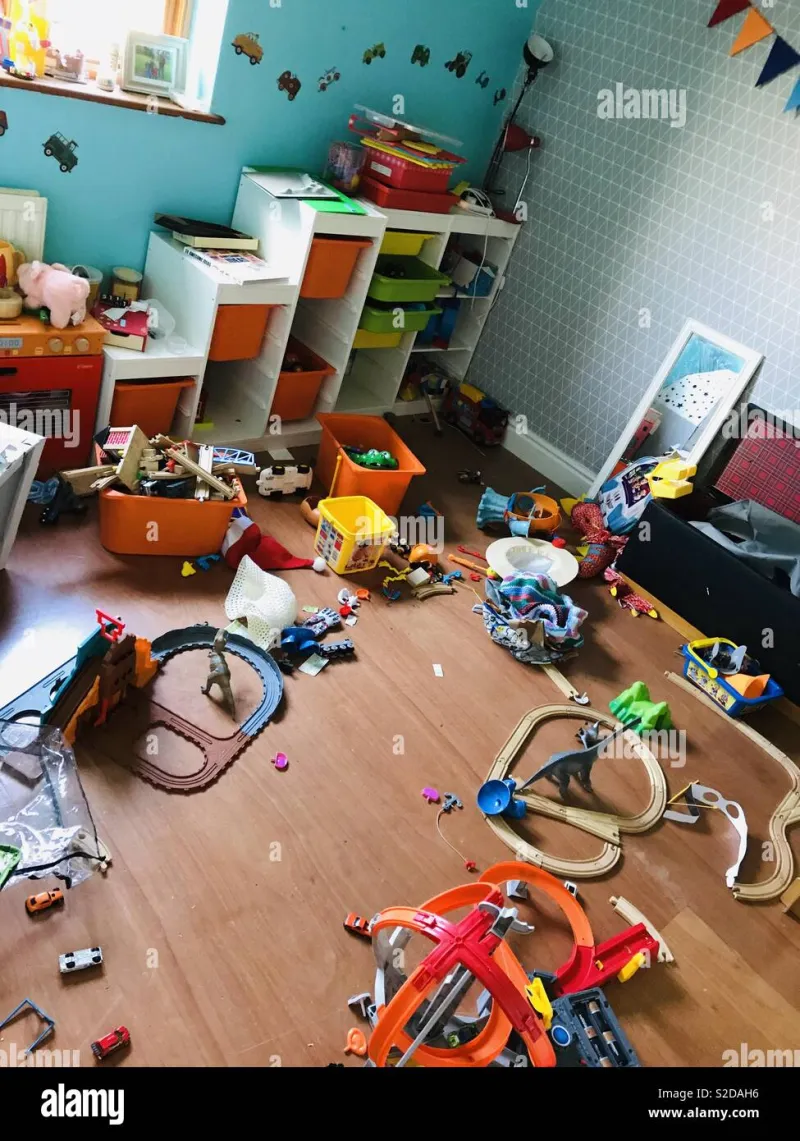
Photo: messy children's playroom aftermath scattered toys cushions, via c8.alamy.com
There's a moment at the end of every Pop Up & Play Co. session that nobody books a ticket for. The families have gone. The kettle's on in the crew corner. And the space we spent six weeks building looks like it's been raided by a very small, very enthusiastic crime syndicate.
We've started photographing it. Not for marketing — nobody wants a picture of a lone sock in a ball pit on the Instagram grid — but for ourselves. Because the debris left behind is the most honest user research we will ever get.
The Evidence Locker
Last month in Sheffield, the closing-time haul included: one child's welly, size 8, standing proudly upright in the middle of the climbing zone like it had been placed there deliberately; a half-built cushion fort that someone had clearly abandoned mid-masterpiece; three digestive biscuits arranged in a line along the sensory bench (we have questions); and a single sock, striped, damp, lying at the bottom of the slide run-out.
You can learn a lot from a sock. Its position told us that children were going down the slide at speed, feet first, and losing footwear on the way. That's not a design failure — that's a design success. It meant the slide was fast enough to be worth shouting about.
The Mess Map
Over time, we've built what the team calls the mess map. After each session, we photograph and log where things ended up rather than where we put them. Cushions migrate. Balls escape. The quiet corner's soft toys end up everywhere except the quiet corner.
Some of it is predictable. But some of it has genuinely changed how we build. In Leeds, we noticed that children kept dragging elements from the construction zone across to the reading nook — so the following month, we merged the two. Turns out nobody wants to read in silence; they want to read in a den they've built themselves, holding a torch, with a friend arguing about whose turn it is with the torch.
That's the kind of insight no exit survey captures. Children don't fill in feedback forms. They leave footprints in ball pits and biscuit constellations on benches instead. You just have to look.
What Abandonment Tells Us
There's a particular kind of debris that means a zone has worked: the abandoned-in-place pile. Shoes kicked off mid-run. A jacket slung over a barrier because someone got too hot. A half-finished drawing left on the craft table, not because the child was bored, but because they were called for home and couldn't bear to stop for goodbyes.
Contrast that with the debris of failure: zones that come out of a session exactly as we left them. Pristine. Untouched. That's the saddest sight in our line of work — a beautifully designed area that nobody bothered to mess up. We've quietly retired two zone concepts on that basis, and we don't miss them.
The Tidy-Up Taxonomy
Our crew now rate the aftermath on an informal scale. A "light dusting" means decent footfall but cautious play. A "proper rummage" means children got comfortable. And a "full archaeology" — wellies in the ball pool, a barricade of soft blocks, someone's grandma reading a abandoned newspaper in the grown-ups' corner — means we've done our job.
The grandma detail matters more than it sounds. When the adults start making themselves at home in the mess, we know the space worked on more than one level. Play that excludes the parents is only half a design.
Photographing the After, Not Just the Before
Brands commissioning a pop-up usually want to see the space at its best: empty, gleaming, photographed before the doors open. We've started insisting on a second set of shots — the ten-minutes-later set. They're rarely polished enough for a brochure, but they're proof of use. Evidence, not decoration.
Because here's the philosophy bit, the bit we keep coming back to: a play space isn't finished when we finish building it. It's finished when it's been thoroughly, cheerfully dismantled by the people it was built for. The mess is the review. The lost sock is the five-star rating.
We'll keep tidying up, obviously. Someone has to. But we'll keep photographing the wreckage first — every wellie, every biscuit line, every half-built fort — because that's the part of the story worth keeping.